EaaS Business Model: From Asset-Heavy to Asset-Light in Turkey's Energy Market
This article examines the strategic imperative of an asset-light approach in Turkey's energy market, drawing lessons from SunEdison's bankruptcy in light of new regulations for C&I energy assets and global EaaS business models. It highlights EaaS's potential for yield optimization and cost arbitrage, especially for solar power plant owners and C&I facilities.
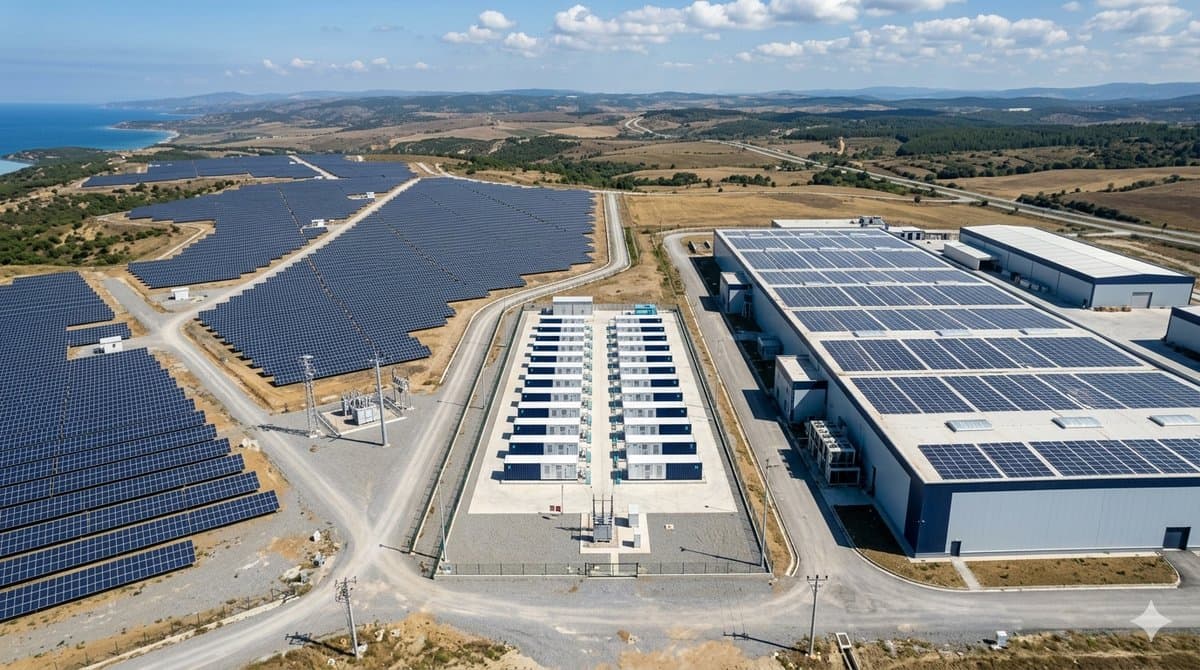
Reflecting on the new regulatory adjustments for C&I (Commercial & Industrial) energy assets in Turkey and global EaaS (Energy-as-a-Service) business models in the past quarter, SunEdison's bankruptcy in 2016 came to mind. As one of the early giants in the renewable energy sector, SunEdison adopted an “asset-heavy” model during its rapid growth, meaning it financed, owned, and operated projects. When market conditions shifted, it buckled under the financial burden. This lesson vividly illustrates why an “asset-light” approach is not just a preference but a strategic necessity when discussing the EaaS model in today's Turkish energy market. Today, the complexity of energy assets and the speed of market dynamics necessitate new business models that maximize value while minimizing financial risks.
EaaS, in its simplest definition, is the delivery of energy services through a subscription or performance-based model. Instead of bearing the hardware investment and operational risk, the customer pays a fee based on energy performance or savings. This model holds different meanings for various segments, especially in a rapidly developing market like Turkey with frequently changing regulations.
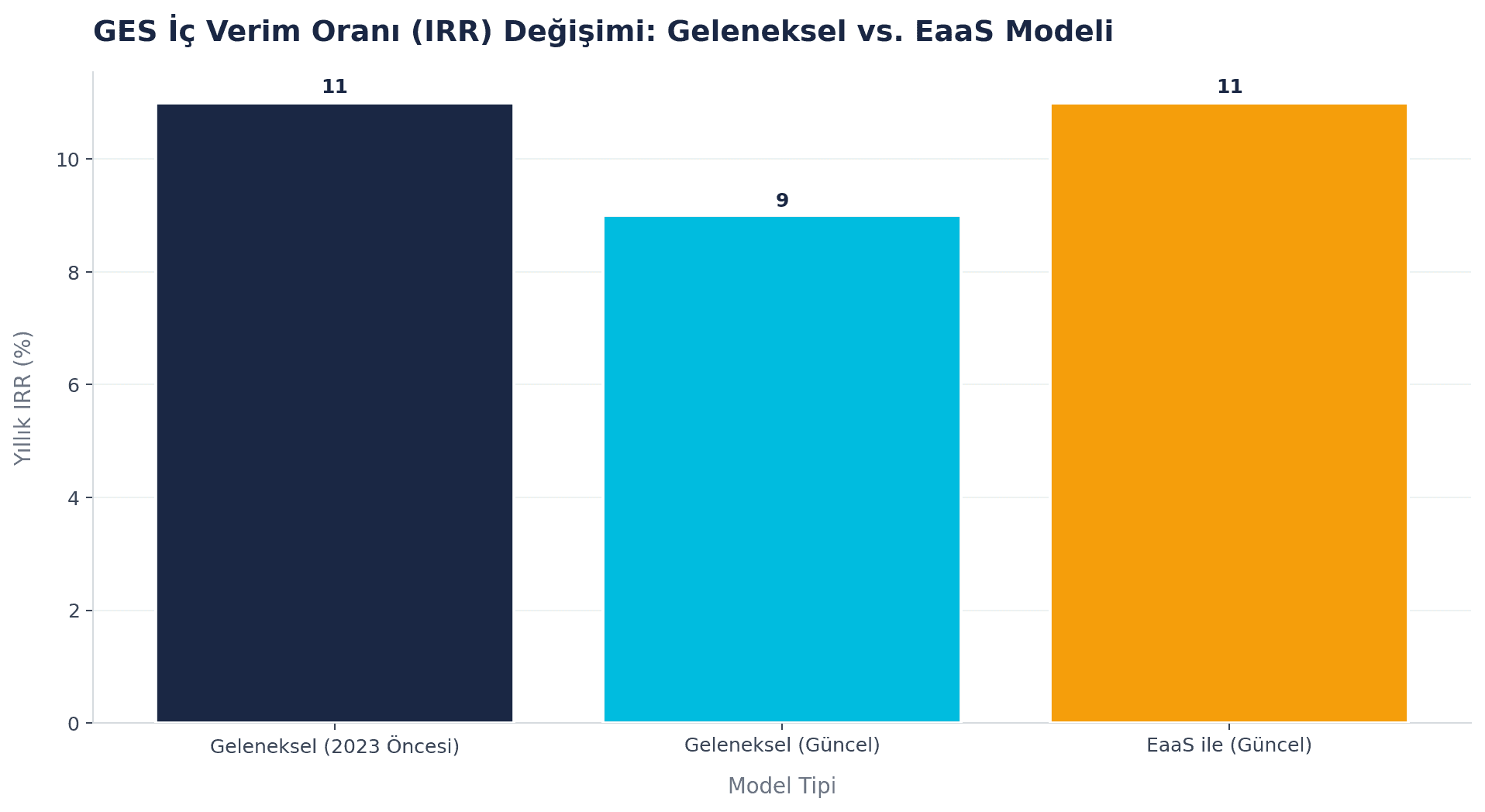
For Solar Power Plant Owners: Increasing Complexity and Yield Optimization For GES (Güneş Enerjisi Santrali - Solar Power Plant) owners, the new era signifies much more than just generating kWh. Hourly netting and grid flexibility demands, in particular, challenge the old “produce and sell” model. While a typical GES owner aimed for an annual IRR (Internal Rate of Return) of around 10-12% before 2023, this rate has dropped to 8-10% under current market conditions. The main reasons for this decline include regulatory changes, increasing grid connection costs, and volatile market prices.
The EaaS model offers GES owners an opportunity to manage this complexity and optimize their returns. In a traditional license sale model, the GES owner purchases the software once, and the optimization responsibility largely remains with them. In EaaS, the software provider takes a share based on the plant's real-time performance and the additional value it creates. For example, if a GES achieves an additional 2-3% annual income by optimizing its energy production according to weather forecasts and market prices with our Pulsar software, a portion of this additional income is transferred to the service provider. This creates a win-win scenario for both parties: the GES owner gains additional income without risk, while the service provider is directly linked to performance.
For C&I Facilities (Self-Consumption Focused): Hourly Netting and Cost Arbitrage Industrial and commercial facilities are increasingly turning to their own energy generation and storage assets due to rising energy costs and carbon footprint targets. For C&I facilities in Turkey, the importance of energy management has multiplied, especially with the introduction of the hourly netting mechanism. While it was easier to feed surplus energy into the grid with monthly netting in the past, the balance between production and consumption in each hourly slot is now critical. A typical industrial facility has the potential to save 15-20% on its annual electricity bill with proper energy management. However, managing this manually is impossible.
The EaaS model offers C&I facilities autonomous software solutions that manage this complex balance, without high upfront costs. DERMS (Distributed Energy Resources Management System) software like Pulsar optimizes the facility's GES production, battery storage, and consumption profile in real-time. For example, as the facility's consumption curve (as seen in graphic_1) fluctuates throughout the day, Pulsar software charges and discharges the battery to both minimize energy drawn from the grid and reduce peak loads. This prevents penalties that may arise from hourly netting and enables market price arbitrage. In the EaaS model, a provider like N2N takes a percentage of these savings, while the C&I facility does not have to pay an additional software cost on top of hardware investment and starts saving without taking risks.
**Graphic 1: Daily Consumption Profile of a Typical C&I Facility and the Impact of Pulsar Optimization**
As seen in the graph below, in a scenario where Pulsar software is not active, the facility's daily consumption profile is highly volatile with high peak points. Thanks to Pulsar's autonomous optimization, these peaks are shaved, and the amount of energy drawn from the grid is significantly reduced by integrating battery storage and GES production. This directly leads to a decrease in energy costs and contributes to grid stability.
For BESS Investors and Operators: Diversifying Revenue Streams Battery Energy Storage Systems (BESS) are new and critical players in the energy market. However, the return on BESS investments is not limited to relying on a single revenue stream (e.g., arbitrage). Various revenue avenues exist, such as TEİAŞ's (Turkish Electricity Transmission Company) ancillary services market, capacity mechanisms, and the balancing market. For an average BESS project, the projected IRR of around 15-18% at the beginning of 2024 may drop to the 12-15% range due to market volatility and regulatory uncertainties. This means risk for investors.
EaaS offers BESS investors a model that maximizes these revenue streams and distributes risks. Utility-scale DERMS software like Quasar instantly evaluates all market opportunities for the battery to determine the most profitable discharge strategies. For example, complex tasks such as directing the battery to the balancing market when prices are high, simultaneously meeting capacity market requirements, and performing arbitrage in the spot market are autonomously managed by Quasar. In the EaaS model, N2N takes a percentage of the total revenue generated from these multiple revenue streams. This way, the investor pays based on the battery's actual performance without upfront high software costs and benefits from continuous optimization. This “pay-for-performance” model offers the investor more predictability and risk-sharing.
What's Changing in Engineering and Software? The EaaS model fundamentally transforms the approach to software development and engineering. Instead of just selling a product and providing support, it now requires continuous monitoring and optimization of the value that product creates in the field. This impacts everything from software architecture to operational processes. Our products Photon, Pulsar, and Quasar, developed under our algorithmic umbrella E-Hub, are based on this philosophy of continuous optimization.
On the engineering side, this model pushes us to focus on the following areas: - **Real-time Data and Analytics:** For a performance-based model, billions of data points (telemetry, market prices, weather) from the field need to be processed in real-time and converted into meaningful insights. Hundreds of sensor data points coming per second from a BESS must be processed without delay. - **Autonomous Decision-Making:** It is essential for the software to make optimal discharge/charge decisions without human intervention. This requires complex optimization algorithms and artificial intelligence models. - **Reliability and Security:** As an EaaS provider, we must guarantee the continuity of the customer's energy operations. This covers a wide range from cybersecurity to system redundancy. - **Modular and Scalable Architecture:** To offer solutions under one roof for different asset types (GES, BESS, EV Charging Stations) and different scales (residential, C&I, utility), a microservices-based, flexible architecture is imperative.
This transition encourages our engineering teams not only to write code but also to understand financial models and follow energy market dynamics.
Asset-Light Approach: Lessons Learned from SunEdison The “asset-light” nature of the EaaS business model, meaning technology providers like N2N do not own hardware assets, is a strategic necessity. SunEdison's story clearly demonstrates this. The company purchased and financed billions of dollars worth of GES projects in its pursuit of rapid growth. However, rising interest rates, increasing financing costs, and changing market conditions caused this asset-heavy structure to bankrupt the company.
In our approach, hardware financing and asset ownership belong to our business partners. With our Photon, Pulsar, and Quasar software, we optimize the performance of these assets and increase operational efficiency. This way: - **Financial Risk is Reduced:** Large capital investments and debt burdens are avoided. - **Scalability Increases:** Instead of dealing with asset financing, software solutions can be deployed faster and across wider geographies. - **Focus Becomes Clearer:** Technology development and optimization become our main focus.
This model also forms the basis of our strategy to expand from Turkey to Southeast Europe (especially with our first reference projects in Bulgaria) and then to larger EU markets. We will share our approach and expansion plans in Europe in more detail at Intersolar 2026.
The Road Ahead: EaaS's Role in Decentralized Energy Management The Turkish energy market is evolving towards a decentralized structure. Distributed energy resources (DER) such as small-scale GES, battery storage systems, and electric vehicle charging stations are spreading across every point of the grid. Effectively managing this distributed structure is impossible without autonomous and intelligent software solutions.
The EaaS model will play a critical role in this transformation. Energy asset owners may be hesitant to adopt these technologies due to high upfront costs and operational complexities. EaaS will remove these barriers, making technology accessible to a wider audience. We expect this model to grow rapidly in Turkey and the EU within the next 5 years. As a GES owner or C&I facility manager, it's beneficial to ask yourself these questions: Are you fully utilizing the potential of your existing energy assets? How flexible are you against market changes? And most importantly, how much can you save or gain additional income with a performance-based model, without making a software investment?
The answers to these questions will shape your energy future.
We describe how we address this on the product side here: Distributed Energy Resource Management.